Yalda Night celebration

Yalda Night traditions celebrated on ( December 21 )  the longest night.

Yalda Night celebration is one of the oldest and most meaningful cultural traditions in Iran, observed on the longest night of the year, which falls on the evening of December 20 or 21, marking the winter solstice.

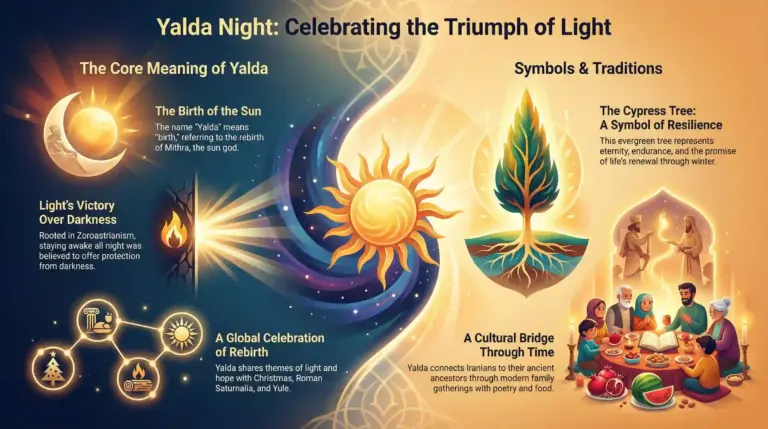
This ancient celebration dates back thousands of years to pre-Islamic Persia and symbolizes the victory of light over darkness and the rebirth of the sun.

Yalda represents hope, renewal, and the promise of longer days ahead, which is why warmth, joy, and togetherness are at the heart of this special night.

One of the most visible symbols of Yalda Night is the color red, reflected in clothing, decorations, and seasonal fruits, representing life, warmth, love, and the rising sun.

Traditional Yalda foods include: 

😊(all beautifully arranged on the traditional sofreh-ye Yalda)

🍎 pomegranates
🍉 watermelon
🍊 persimmons
🍠 beets (laboo)
🥜 a variety of nuts
🍇 dried fruits

What do Iranian people do on Yalda night?

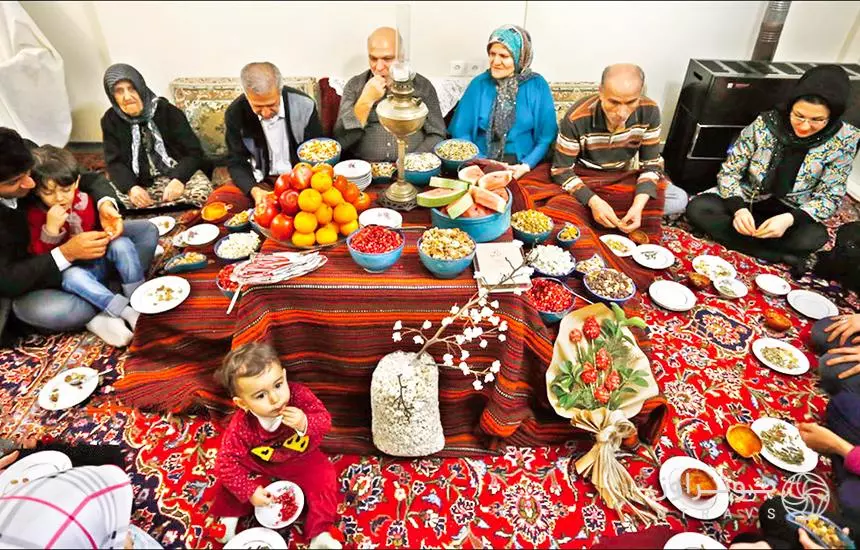
Yalda Night celebrationFamilies traditionally gather at the home of the elders, honoring parents and grandparents while strengthening family bonds through long conversations, shared meals, and late-night gatherings. Reading Hafez’s poetry, taking Fal-e Hafez, storytelling, and in some families Shahnameh recitations from Ferdowsi are central parts of the celebration, connecting generations through Iran’s rich literary heritage. 

For foreign travelers interested in experiencing Yalda Night firsthand, Rosha Safar Basir provides the opportunity to join an authentic Iranian family gathering as part of our experiential inbound tours. Guests can sit together with an Iranian family, take part in Hafez recitations and Fal-e Hafez, listen to traditional stories, share Yalda foods, and experience the warmth of Iranian hospitality in a genuine home setting. This unique cultural interaction transforms Yalda Night from a simple observation into a memorable, heartfelt experience that allows travelers to truly connect with Iranian culture and traditions.

for more information feel free to contact with us.
You can book Iran tours packages online now.

contact us

Call us for a chat about our tour packages. We are happy to discuss your holiday and help in any way we can.

feel free to contact us

The Origins of Yalda

The Origins of Yalda can be traced back to ancient Persia and the early Indo-Iranian belief systems, where the longest night of the year marked a turning point in the cosmic cycle of darkness and light.

The word Yalda itself comes from the Syriac language, meaning birth, and was later adopted into Persian culture during the Sassanid era. It refers to the birth of the sun (Mithra), the god of light in ancient Iranian mythology, symbolizing the victory of light over darkness after the winter solstice. This concept closely aligns Yalda with other global midwinter celebrations such as Christmas in Christian tradition, Saturnalia in ancient Rome, and Yule in Northern European cultures—all of which celebrate rebirth, light, and hope during the darkest time of the year.

origin of yalda

Yalda is deeply rooted in Zoroastrian philosophy, where light represents truth and goodness, and darkness symbolizes chaos and evil. Staying awake through the longest night was believed to protect people from harmful forces until sunrise returned. One important yet lesser-known symbol on the Yalda table is the cypress tree (Sarv), which represents resilience, eternity, and spiritual freedom in Persian culture. The evergreen nature of the cypress mirrors the theme of life continuing through winter and the promise of renewal. In ancient times, cypress branches were sometimes displayed as sacred symbols of endurance and moral strength, reinforcing Yalda’s message of hope, continuity, and victory over hardship.

Ultimately, Yalda is not merely a seasonal celebration but a cultural bridge between ancient Persian cosmology and modern family traditions. Originating from pre-Islamic Iran and evolving through centuries of cultural exchange, Yalda has survived as a living ritual that connects Iranians to their ancestors while sharing universal human values found in similar traditions around the world. Today, Yalda continues to unite families around poetry, storytelling, and symbolic foods, preserving its ancient meaning while remaining relevant in contemporary Iranian life.

Yalda Night Traditions

Yalda Night Traditions are deeply rooted in Iranian culture and revolve around family, symbolism, and the celebration of light, life, and togetherness on the longest night of the year. In the days leading up to Yalda, families prepare by shopping for special items for the Yalda table (sofreh-ye Yalda), including fresh fruits, nuts, sweets, and decorative elements. Markets become lively with displays of red fruits such as pomegranates and watermelon, along with nuts, dried fruits, candles, and sometimes small symbolic decorations like cypress branches or poetry books, especially the Divan of Hafez.

On Yalda Night, families traditionally gather at the home of the elders, where the Yalda table is beautifully arranged. Hafez poetry reading and Fal-e Hafez are among the most beloved customs, with family members taking turns opening the poetry book and interpreting verses as symbolic guidance for the future. In many households, Shahnameh reading from Ferdowsi is also practiced, passing down epic stories of heroes, bravery, and moral values to younger generations. Alongside poetry, storytelling, memory sharing, and reminiscing about family history play an important role, creating emotional connections and strengthening generational bonds.

Food is a central part of Yalda Night celebrations. The table typically features pomegranates, watermelon, persimmons, beets (laboo), nuts, seeds, and dried fruits, each carrying symbolic meanings of health, fertility, and protection. While there is no single mandatory main dish, families often enjoy traditional home-cooked meals such as rice dishes, stews, or seasonal comfort foods before or during the gathering. Tea, sweets, and homemade desserts are served throughout the night as families stay awake, talk, laugh, and celebrate until after midnight. Together, these traditions transform Yalda Night into a living cultural ritual that blends poetry, food, storytelling, and family unity into a warm and unforgettable experience.

Reading the Enchanting Poems of Hafez

Shams al-Din Mohammad Hafez Shirazi is one of the most beloved and influential poets of 14th-century Iran. Nearly every Iranian household keeps a copy of his poetry collection, the Divan-e Hafez.

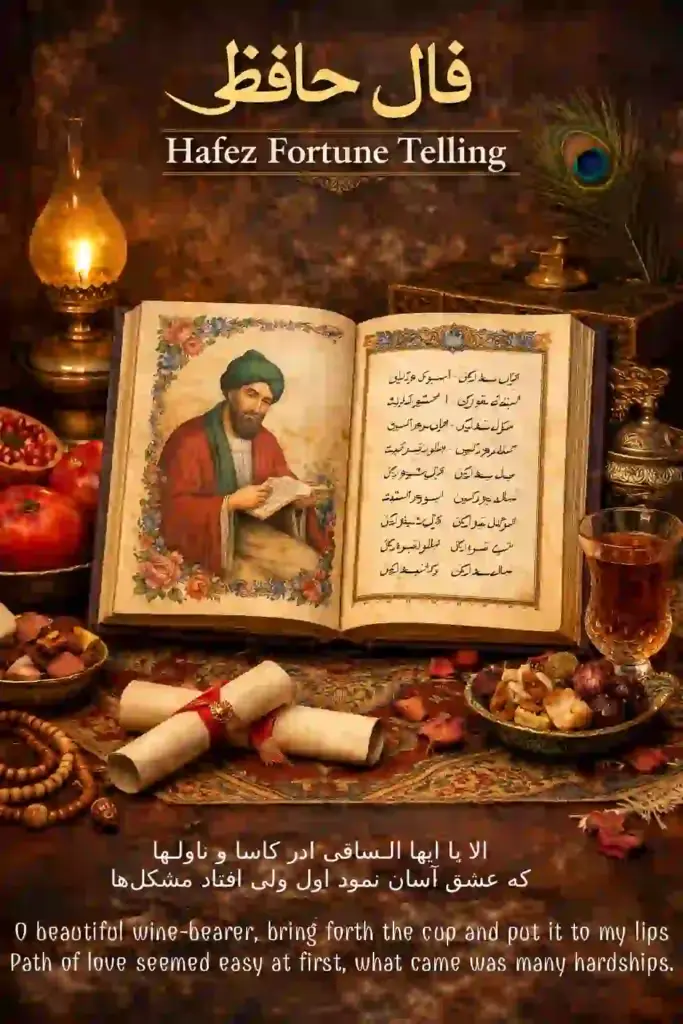
A cherished Yalda tradition is Hafez Khani. After the meal, an elder family member opens the Divan at random and reads the poem on that page. Each person makes a wish or silently asks a question, and the selected poem is interpreted as Hafez’s spiritual answer.

This ritual adds meaning, reflection, and emotional connection to the celebration, blending family, poetry, hope, and ancient cultural heritage into one unforgettable night.

O beautiful wine-bearer, bring forth the cup and put it to my lips / Path of love seemed easy at first, what came was many hardships. / With its perfume, the morning breeze unlocks those beautiful locks / The curl of those dark ringlets, many hearts to shreds strips. / In the house of my Beloved, how can I enjoy the feast / Since the church bells call the call that for pilgrimage equips. / With wine color your robe, one of the old Magi’s best tips / Trust in this traveler’s tips, who knows of many paths and trips. / The dark midnight, fearful waves, and the tempestuous whirlpool / How can he know of our state, while ports house his unladen ships. / I followed my own path of love, and now I am in bad repute / How can a secret remain veiled, if from every tongue it drips? / If His presence you seek, Hafiz, then why yourself eclipse? / Stick to the One you know, let go of imaginary trips.

الا یا ایها الـساقی ادر کاسا و ناولـها
که عشق آسان نمود اول ولی افتاد مشکل‌ها
بـه بوی نافه‌ای کاخر صبا زان طره بگـشاید
ز تاب جعد مشکینش چه خون افـتاد در دل‌ها
مرا در منزل جانان چه امـن عیش چون هر دم
جرس فریاد می‌دارد که بربندید مـحـمـل‌ها
بـه می سجاده رنگین کن گرت پیر مغان گوید
کـه سالک بی‌خبر نبود ز راه و رسم منزل‌ها
شـب تاریک و بیم موج و گردابی چنین هایل
کـجا دانـند حال ما سبکـباران ساحـل‌ها
همـه کارم ز خود کامی به بدنامی کشید آخر
نـهان کی ماند آن رازی کز او سازند محفل‌ها
حضوری گر همی‌خواهی از او غایب مشو حافظ
مـتی ما تلق من تهوی دع الدنیا و اهملـها

Yalda Night Traditions

How much longer is Yalda night

How much longer is Yalda night compared to other nights of the year is a question closely tied to the winter solstice, when the night reaches its maximum length and the day is at its shortest. In Iran, Yalda Night is typically only a few minutes longer than the nights immediately before and after it; however, its importance is symbolic rather than mathematical. This slight extension of darkness represents the peak of night and the turning point toward longer days and lighter. Because Yalda is believed to be the final triumph of darkness before light begins to grow, families traditionally stay awake until late at night and often past midnight, gathering together so that no one faces the longest night alone. People sit together, talk, laugh, share memories, tell stories, read poetry, and enjoy seasonal foods, remaining awake for as long as they can before sleep naturally arrives. The true length of Yalda Night is therefore measured not in minutes, but in the warmth of togetherness, the depth of conversations, and the shared moments that turn the longest night of the year into one of the most memorable nights in Iranian culture.

How Is Yalda Celebrated?

Yalda Night is filled with laughter, storytelling, poetry, and heartfelt family gatherings that last until dawn. Friends and relatives typically gather at the house of the family elders to spend the year’s longest night together.

Traditional Iranian homes often set up a korsi—a low table with a heater underneath, covered by a large blanket. Family members sit around it, sharing warmth and enjoying each other’s company. Although modern homes may not always use a korsi, many still prepare one for Yalda to preserve the tradition.

Homes are decorated with a table filled with symbolic foods, and families celebrate the joy of togetherness and the anticipation of brighter days.

yalda night symbols

yalda night symbols reflect deep layers of meaning rooted in ancient Persian beliefs about light, life, and renewal. One of the most important symbols is pomegranate, whose red color represents vitality, fertility, love, and the life-giving power of the sun. Watermelon, traditionally eaten on Yalda Night, symbolizes health and protection against illness during the coming winter, and its green rind and red flesh echo the balance between nature and warmth. The color red, seen in fruits, decorations, and sometimes clothing, represents energy, life, joy, and the victory of light over darkness at the winter solstice.

Another key symbol of Yalda is fire and candles, which stand for light, hope, and spiritual awareness during the longest night of the year. Nuts and dried fruits (ajeel) symbolize abundance, blessings, and prosperity, while beets (laboo) represent warmth, nourishment, and comfort in the cold season. Poetry books, especially the Divan of Hafez, are central symbols of wisdom, fate, and inner reflection, connecting families through shared meaning and interpretation. The cypress tree (sarv), sometimes represented through decorations or imagery, symbolizes resilience, freedom, and eternal life, as it remains green even in winter. Together, these Yalda Night symbols form a meaningful tapestry that transforms a simple family gathering into a ritual celebrating hope, continuity, and the enduring spirit of Iranian culture.

The Special Appearance of Yalda Night: The Color Red

Red is the dominant color of Yalda Night. Not only are the fruits—watermelon and pomegranate—red, but guests often wear red clothing as well. Red represents:

  • the crimson light of dawn,
  • the rebirth of the sun,
  • and the glow of life.

To emphasize the victory of light, homes and gardens are decorated with candles, lanterns, and other light sources. In some cities, fireworks also accompany the celebration.

In ancient Iran, Mithra, the goddess of light, was believed to bring warmth and life. Yalda Night is often associated with honoring her, and the red decorations symbolize the shining glow of Mithra’s light.

748
0
Would love your thoughts, please comment.x
()
x